
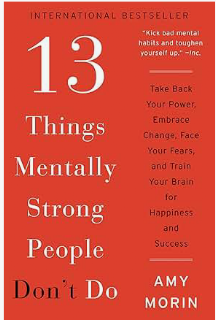

Amy Morin’s 13 Things Mentally Strong People Don’t Do: A Blueprint for Resilience
Amy Morin’s 13 Things Mentally Strong People Don’t Do isn’t just a self-help book—it’s a wake-up call to rewrite unhealthy mental habits. Drawing from her experience as a psychotherapist and her own journey through grief (losing her husband at 26), Morin identifies 13 toxic behaviors that sabotage resilience, offering actionable strategies to replace them with strength. The book’s premise is simple yet profound: mental strength isn’t about what you do but what you stop doing.
Why Amy Morin’s Voice Resonates
Morin is no armchair theorist. A licensed clinical social worker and TEDx speaker with over 22 million views, she blends clinical expertise with raw honesty. Her viral 2013 article evolved into this bestselling guide, translated into 40+ languages. Forbes hails her as a “thought leadership star,” and her advice has been featured everywhere from Good Morning America to Psychology Today. What sets Morin apart is her empathy—she writes as someone who’s navigated darkness and emerged stronger.
Why This Book Matters
This isn’t abstract advice. Each chapter tackles a specific pitfall—like self-pity, people-pleasing, or fearing change—with real-world examples (e.g., a recovering alcoholic swapping bar trips for walks with friends). Morin’s “What’s Helpful vs. What’s Not” sections offer concrete steps, making growth feel achievable. She doesn’t just diagnose problems; she hands you tools to fix them.
The book’s genius lies in reframing mental strength as a daily practice. As Morin writes, “Mental strength is like physical strength—you can’t wish for it, you have to train for it.” Whether you’re battling burnout, navigating loss, or simply seeking grit, her insights cut through platitudes.
Questions to Spark Reflection:
1. Which of the 13 habits do you struggle with most—and what small step could disrupt it today?
2. How might embracing “alone time” (habit #11) transform your relationship with yourself?
3. Can society’s emphasis on “positivity” sometimes hinder authentic mental strength?

0 Comments